Press Cmd/Ctrl + P and choose “Save as PDF” (landscape, no margins).
How this case came to be
What happens when a federal litigation lawyer…
1becomes a JFK buff
2reads the latest updates on the Zapruder film
3learns FOIA
4learns copyright
5asks why are the Museum and NARA doing this in 2026?
United States District Court · Northern District of Texas · Dallas Division
Forum on Open Access to Government Records v. The Sixth Floor Museum & the National Archives (Zapruder Copyright/FOIA Case)
Civil Action No. 3:25-CV-2034-B · Decided August 5, 2026
Senior United States District Judge Jane J. Boyle
Prior Zapruder copyright cases
- Time sued Bernard Geis to stop publication of frames in the Warren Commission critique.
- The first and only attempt to enforce the Zapruder copyright in court.
- Time held a valid copyright, but Thompson's Six Seconds in Dallas was fair use — even though there was bad faith, because Thompson stole the slides.
- After filing suit, Henry Zapruder settled immediately, providing Selby a license.
- Resolved by settlement, so no court opinion was issued, leaving the licensing practice to continue.
- The Forum published SCAM and sued for declaratory relief.
- The first case to reach a substantive ruling on the copyright's validity.
Six decades of litigation — but until now, no court has ruled on whether the Zapruder copyright is valid.
SCAM: The Zapruder Copyright
How the Sixth Floor Museum Continues the Coverup
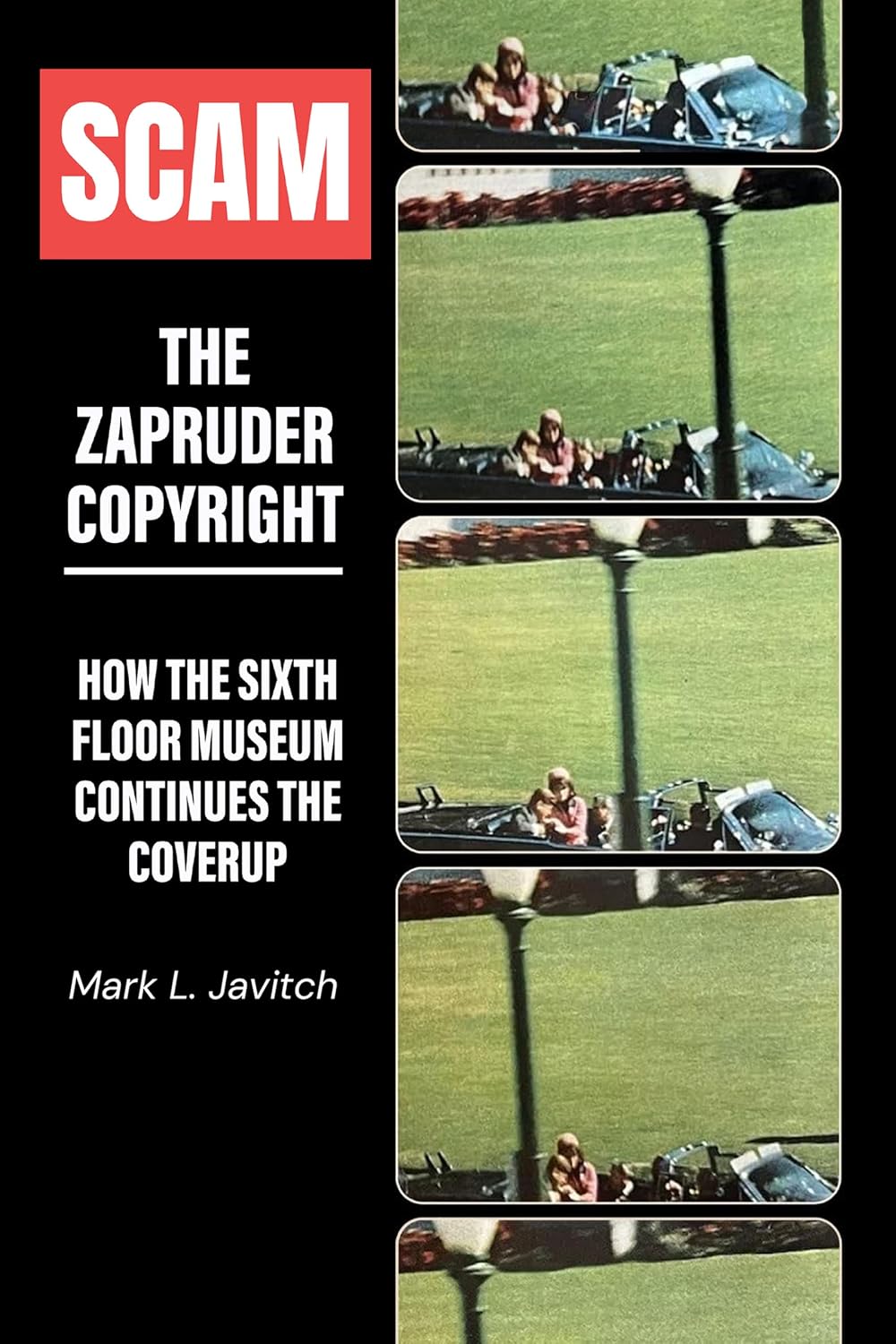 View the book on Amazon →
Cover reproduces sequential Zapruder frames — echoing the frames LIFE first published in its Nov. 29, 1963 issue.
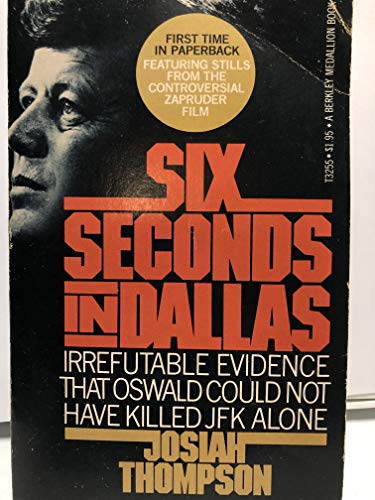
Six Seconds in Dallas (1967) — the book whose fair-use win in Time v. Geis is the only prior ruling on the Zapruder copyright.
- Published by the Forum in May 2025; available as an e-book on Amazon.
- Reproduces roughly 72–73 frames from the Zapruder film — unlicensed — to pinpoint the alterations the authors allege.
- Argues the Sixth Floor Museum uses its claimed copyright to suppress scrutiny of the film and perpetuate a "coverup."
- Its central thesis: the film the public knows is an altered version, and the Museum's copyright control keeps the originals hidden.
That unlicensed reproduction is what later becomes the fair-use cause of action the Court lets proceed.
A first-of-its-kind challenge
No reported case is believed to have joined a copyright challenge against the holder with a FOIA challenge against the National Archives in a single action — making this, as far as we know, the first case of its kind.
The Court's Holdings
Previous attempts
- Another organization requested two obscure versions of the Zapruder film from NARA under FOIA.
- NARA rejected the request because the requester had not sought copyright permission from the Museum.
- The court granted summary judgment for NARA on the same ground. Read the decision →
- Now on appeal to the Ninth Circuit. Read the opening brief →
We should win: copyright is not a recognized FOIA exemption, so NARA cannot withhold agency records on that basis.
- The Forum sued the Museum in 2025, before the book was published.
- Dismissed for lack of standing — no case or controversy yet existed between the parties.
- Without a published work, there was no live infringement dispute to adjudicate.
The lesson: a copyright challenge needs an actual, live dispute — which is why the Forum later published SCAM first.
Third time's a charm
- Dismissed — requester had not asked permission from the copyright holder.
- Blocking a requestor's FOIA request does not confer personal jurisdiction.
- Now on appeal to the Ninth Circuit.
- Sued while planning to write a book — none published yet.
- Dismissed for lack of a case or controversy.
- No live threat of infringement to adjudicate.
- Asked the Museum for permission twice — the Museum declined the first request and did not respond to the second request.
- The Forum then published SCAM first, reproducing Zapruder frames unlicensed.
- Standing now exists: a genuine, live controversy over the copyright.
The third attempt is the one before this Court — and it is where the book SCAM enters the story.
What SCAM argues
Where the film is — and who controls access
The practical effect: the film is effectively locked away — viewable only on the Museum's and NARA's terms, with no independent reproductions permitted.
Historical research at the National Archives
- ●On-site research at the National Archives in College Park, Maryland — the same reading room where the Zapruder frames are held.
- ●Recovered and digitized the entire Time, Inc. v. Geis case file from the National Archives in Kansas City — the 1967 suit, the first judicial test of the film's copyright.
- ●Obtained LIFE's original copyright registration certificates from 1967 — the actual records for the film and its published frames.
- ●Collected over 100 original documents tracing the film's history: acquisition records, licensing correspondence, and internal memoranda.
- ●Every document published free online at Zapruderfilm.com — open access, no paywall.
Time, Inc. v. Geis (1967)
The first court test of the Zapruder copyright — LIFE/Time sued a publisher who reproduced frames in a book about the assassination. The full docket, briefs, and exhibits are now online.
100+ original documents
Archival records and correspondence that reconstruct how the Zapruder film moved from a private home movie to a federally held historical record — and who controlled it along the way.
Some of the greatest documents in the archive
Also: Warren Commission Exhibit 885, the 1963 Zapruder–Time agreements, the 1975 Assignment. Free at Zapruderfilm.com →
Three goals of the lawsuit
The nine causes of action map onto these goals — the declaratory claims attack the copyright's validity and scope; the FOIA claim compels NARA to post the frames online.
7 arguments for copyright invalidity and fair use
Does the Forum have standing?
May the Court order the National Archives to post the records plaintiff sought on its website?
Not an original work
DISMISSEDWaiver (frames 207–212)
PROCEEDSFraud on the Copyright Office
DISMISSEDAbandonment
PROCEEDSDefective chain of transfers
DISMISSEDMerger of idea and expression
DISMISSEDCopyright used to suppress facts
DISMISSEDFair use (declaratory)
PROCEEDSFOIA reading-room injunction (NARA)
PROCEEDSIs there an "actual controversy"?
- The Declaratory Judgment Act's "actual controversy" tracks Article III. MedImmune replaced the old two-part reasonable-apprehension test with an all-the-circumstances inquiry.
- SanDisk: where a rights holder asserts IP against another's activity and that party claims a right to proceed without a license, the latter has standing.
- An explicit threat of suit is not required — "even an explicit disavowal of future legal action will not eliminate" a controversy where conduct shows preparedness to enforce. Bell v. Accumetric; Poly-America.
The Court finds a live controversy
- The Forum actively uses the frames without a license; the Museum actively claims copyright in them. Not hypothetical.
- The Museum denied licenses, conditioned future requests on agreeing not to challenge validity, and refused to withdraw FOIA objections.
- Its disavowal of impending litigation does not divest standing.
- A well-defined, concrete dispute — the reverse of Time v. Geis, where the court found no live controversy between the parties.
The Museum proposes a closed loop: NARA rejects FOIA requests based on the Museum's copyright, the Museum declines licenses to the requester, and the Museum refrains from threatening or filing suits to prevent anyone from challenging the copyright's validity or scope, ad infinitum.
Though the Court called the Forum's past conduct "questionable," the controversy is substantial and immediate.
Can a court order publication, not just production?
FOIA's Reading-Room Provision, § 552(a)(2), requires agencies to make "frequently requested records" available for public inspection in an electronic format — no request needed. The question is whether the remedial provision, § 552(a)(4)(B), lets a court enforce that duty.
Neither the Supreme Court nor the Fifth Circuit has resolved the question; none of these precedents bind this Court.
Two verbs, two powers
jurisdiction to enjoin the agency from withholding agency records and to order the production of any agency records improperly withheld from the complainant
The "and" links two infinitives, so the modifiers attach only to the second. Answer to NARA's superfluity objection: read the broader "to enjoin" power as excluding what the specific "to order" clause covers.
Three reinforcing reasons
Result: § 552(a)(4)(B) empowers the Court to stop agencies from withholding publication of Reading-Room records — so jurisdiction over the FOIA claim exists.
Not an original work
Plaintiff argued
- The existing film was not an original work — alterations and damage to frames 154–157 and 207–212 defeated originality.
- Copyright ownership is distinct from ownership of the material object (17 U.S.C. § 202).
The Court rejected
- An alteration does not defeat the registration, which enjoys prima facie validity — rebuttable only with sufficient pleaded facts.
- Damage to the physical film is a material-object defect, not a copyright defect.
- Minor alterations to a handful of frames do not make the 1963 film unoriginal.
Repleading: not an original work
Why it was dismissed
- A registration certificate is prima facie valid, and physical damage to a few frames is not a copyright defect (§ 202).
- Bare assertions of non-originality could not overcome the presumption at the pleading stage.
Amended complaint — two alternate grounds
- CIA authorship. Evidence in SCAM from former NPIC personnel suggests the film was authored or substantially altered by the CIA, not Abraham Zapruder — so no copyright ever vested in him, and nothing passed down the chain of title.
- Lack of Feist originality. For frames 154–157 and 207–212, where only copies survive (the originals were cut or destroyed), the amended complaint pleads that the surviving versions lack the “spark” of creativity that Feist Publications v. Rural requires — they were reconstructed, not originally fixed by Zapruder.
- Both grounds attack the creation stage of the life-cycle theory: if no valid copyright was ever created, registration cannot cure the defect.
Waiver of frames 207–212
The Court's ruling
- Copyright can be waived by a particular act — even unintentionally — or by inaction.
- Plausible allegation that Time released frames 207–212 in the 1960s.
- Survives, but reaches only those six frames.
Amended complaint — strengthened
- Adds the January 30, 1967 public release as the proprietor's own affirmative act — not just the 1968 Geis stipulation.
- Time's failure to claim infringement as to those six frames in its own enforcement action.
- Two independent waiver paths: affirmative release plus deliberate non-assertion.
The Forum's research at the National Archives uncovered the stipulation of facts in Time v. Geis that memorializes this decision. Read the stipulation →
Fraud on the Copyright Office
Life-cycle attack, stage two: how the copyright was registered.
The Court's ruling
- A defense may be asserted offensively — that argument by the Museum fails.
- But willfulness and Copyright Office reliance were only bare assertions.
- Dismissed without prejudice for failure to plead fraud with particularity.
Amended complaint — new theory
- Time registered the film as a 1967 “unpublished” work — the registration describes it as a work of approximately ten seconds.
- But over 200 frames had already been published in LIFE magazines in 1963, 1964, and 1966, and in the Warren Commission Report.
- Expiration for those published frames would have been due 25 years after publication.
- The family renewed in 1995 — 25 years after the 1967 “unpublished” registration, too late to revive the already-published frames.
Waiver and abandonment
The Court's ruling
- No enforcement suit since 1969 amid decades of open, cited infringement.
- Abandonment by inaction requires no direct showing of intent.
- A current licensing program cannot resurrect an already-abandoned copyright.
Amended complaint — strengthened
- Time's selective non-assertion inside the Geis action — enforced against some uses, ignored others.
- Henry Zapruder's two-month capitulation in Selby rather than defending the copyright.
- The 1998–99 sequence: heirs sought one price for film and copyright, were paid for the artifact alone, and conveyed the copyright for nothing.
Museum never obtained the copyright
The Court's ruling
- Pleading that documents were "either unsigned or illegible" was "little more than pure speculation."
- The formal assignment is signed by Time, the owner of the rights conveyed (§ 204(a)).
- Dismissed without prejudice.
Amended complaint — repleaded
- Abandons the signature-illegibility theory the Court found speculative.
- Rests instead on the absence of any showing that the person who executed the 1975 assignment was authorized to convey Time, Incorporated's copyright.
- No corporate authorization to convey → no valid transfer → Museum holds no copyright.
Expiration — failure to renew
Life-cycle attack, stage three: whether the copyright still exists.
- Any copyright secured on the 1963–64 publication of the frames expired for failure to renew during the final year of the initial term.
- The 1995 renewal was therefore ineffective — too late to revive an already-expired copyright.
- Replaces old Claim 7 (copyright used to suppress facts), which was dismissed for lack of subject-matter jurisdiction without leave to amend.
Zapruder did not author the registered work (of the existing damaged frames)
The amended complaint attacks the Zapruder copyright at every stage of its life cycle — how it was created (Claim 6), how it was registered (Claim 3), and whether it still exists (Claim 7). This is the first: how it was created.
The Court's ruling (original dismissal)
- Old Claim 6 pleaded the merger doctrine — that idea and expression had merged.
- The Court rejected it and dismissed with prejudice — it cannot be repleaded.
- Crucially, the Court's § 202 discussion left the authorship question open: it held only that damage to the physical film is not a copyright defect, not that Zapruder actually authored the registered work.
Amended complaint — new claim, two alternate bases
- Basis 1 · The damaged frames are not original. The work as registered is not the work Zapruder fixed — the deposited frames, including the damaged and destroyed frames (207–212), were altered after the fact. If he did not fix the registered work, no copyright vested in him.
- Basis 2 · The CIA authored the film (alternate). In the alternative, the film was produced by the CIA, not Zapruder — so authorship and any original copyright would vest in the United States, not a private citizen.
- Either ground dissolves the chain of title at its origin: no valid authorship → nothing passed to Time, the heirs, or the Museum.
Fair use — declaratory judgment
- SCAM's alleged purpose — serious criticism of the film — makes it "the paradigmatic example of fair use under § 107."
- The Museum never addressed the four statutory factors.
- Note: no declaration as to hypothetical future uses of NARA's first-generation copies.
Does the reading room reach pre-1996 records?
NARA's reading would render the 2016 amendment superfluous; the Court's reading leaves the flush language work to do — a one-year buffer for post-1996 records. The Forum has sufficiently alleged that NARA violated FOIA by failing to publish the frames electronically.
The briefing on both motions to dismiss
The Museum's motion
NARA's motion
Citation
Forum on Open Access to Gov't Records, Inc. v. Dallas Cnty. Hist. Found. (The Sixth Floor Museum) & NARA, No. 3:25-CV-2034-B (N.D. Tex. Aug. 5, 2026) (Boyle, J.)
Every quotation, holding, and disposition in this deck is drawn from the Memorandum Opinion and Order (Doc. 32, filed 08/05/26). Allegations described are the Forum's pleadings, accepted as true only for purposes of the motions to dismiss.
Presented by Mark Javitch — mark@javitchlawoffice.com